Advisory, and five engagements for the situations where a decision carries the most risk. Each engagement can be part of an advisory relationship or stand on its own.
Free, with no strings attached and complete discretion. Or see how we work first.
What the work protects
A strong salmon cannot climb a dam.
Everything I do here serves one purpose: to protect the capabilities and processes that add value in an organization, to keep them working, and to expand them where that is possible. Most of the time that means lowering the risk carried in a decision, and the cost of changing course afterward. The cost can be financial, operational or public. A forecast is missed again. A transformation costs what was planned and its benefits fade. One wrong call becomes public.
I worked for more than twenty years with executives and business owners, and saw the same thing in organizations. However developed a leader or a team is, growth stops when the context around them does not allow it. The problems that matter sit in how people interact and in that context. My work starts there.
What you risk in working with me is small and agreed in advance. What you can gain, or avoid losing, is many times larger.
Advisory
I work with people who carry a decision, at any level, from private firms to public institutions and NGOs, on problems that survived the budget, the plan and the reorganization.
Advisory is the working relationship that holds the rest together: with an owner, a CEO, an executive team or a board, and with those who advise them. We look at the decisions in front of you as they come. When a situation needs more, we bring in one of the five engagements below.
An engagement can also stand on its own. Many clients start with one, often when a crisis has already arrived, and decide afterwards whether to continue. Most of my clients are private companies; the same situations come up in family firms, state-owned companies, public institutions and NGOs. You do not need to decide which service fits before we speak.
The same strategic problem has been “solved” more than once and keeps coming back.
Decisions that should take a meeting take a quarter.
The team is competent and committed, and execution still stalls in the same places.
There is more data and advice than ever, and less clarity.
Five engagements
I describe each engagement the way people describe the situation to me on the first call.
02
Growing on unclear ground
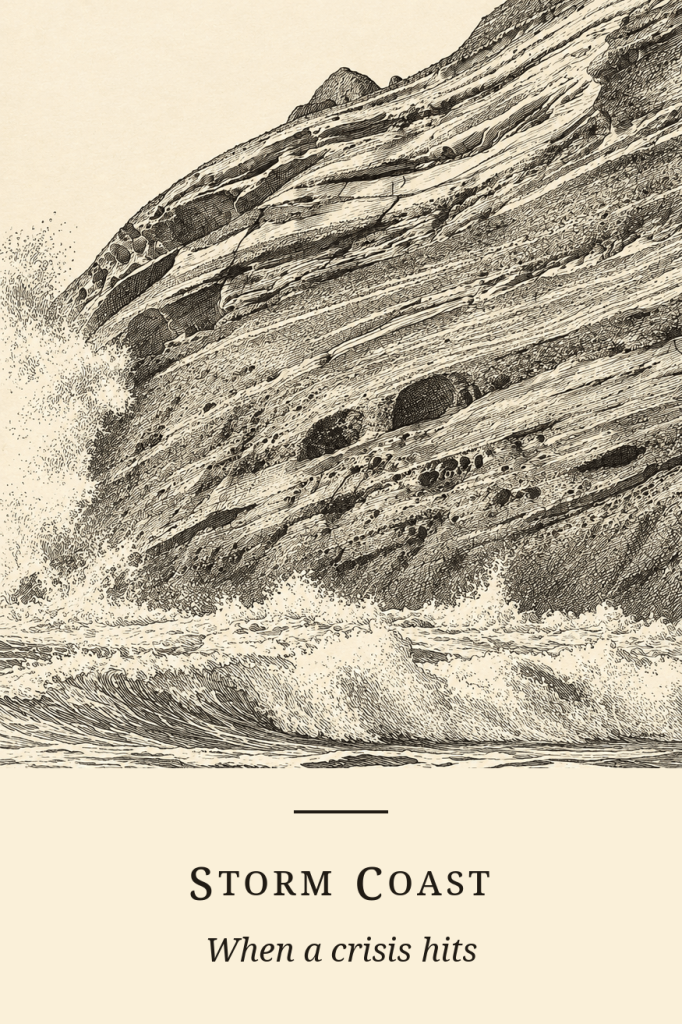
Engagement 1 · When a crisis hits
The numbers fall faster than you can meet. A decision that used to take a month now has to be made in an hour, and a wrong one can become public. I work next to the people leading the response through recovery. We decide what to steady first, what to stop and what to protect. Then we find the way back to normal without bringing back what made the crisis so costly.
If the crisis is already here, use the urgent line on the contact page.
Read: “Why your crisis plan will fail”, part one of A Field Guide for Decision Makers, Business Review.
If this is your situation, the first step is a free conversation: Book 30 minutes
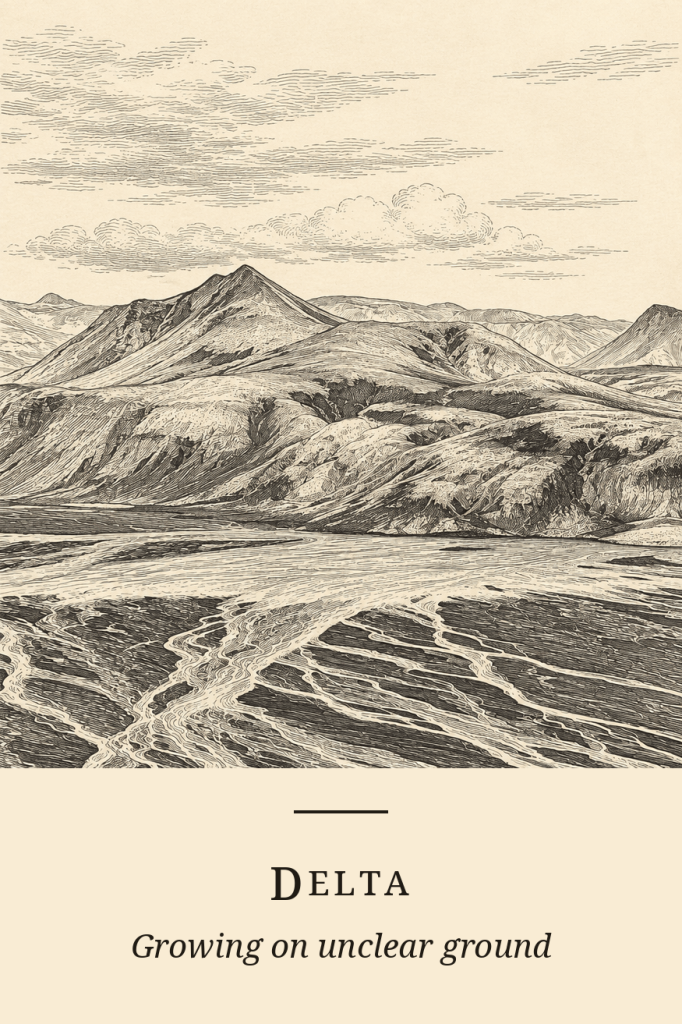
Engagement 2 · Growing on unclear ground
You are entering a new market, buying a company or adding a business line, and nobody can give you reliable figures. Whoever carries the decision carries the risk. Together we look at how the decision is being made. We write down what you know and what you assume. We look at what each option puts at risk. And we agree what would tell you early that you are wrong.
Read: “Sense before you act”, part of A Field Guide for Decision Makers, Business Review.
If this is your situation, the first step is a free conversation: Book 30 minutes
Engagement 3 · Making change happen
The transformation is finished and performance has not moved. Or the plan is agreed and the changes are approved, and they still do not get done. I design the change with the people who will carry it out. We settle who decides what, how people hear about it, what looks different in the first weeks, and how you will know it is working.
Related reading: “Don’t go back to normal”, part of A Field Guide for Decision Makers, Business Review.
If this is your situation, the first step is a free conversation: Book 30 minutes
Engagement 4 · Seeing what is coming
Some risks send signs long before they reach the numbers. Seeing a risk early can leave more time to act before the cost grows. With the people involved I set up the scanning. We choose where to look, which signs to take seriously, and how a weak sign reaches the people who decide while there is still time to act.
Read: “Success blinds you the same way panic does”, part five of A Field Guide for Decision Makers, Business Review.
If this is your situation, the first step is a free conversation: Book 30 minutes
Engagement 5 · Building what the organization can do
Some organizations see change early, decide fast and act on what they learn, even when the plan no longer fits. That ability lives in how people share what they know, including what the organization knows and has never written down. The people inside build it. I stay with them until they can do it without me.
If this is your situation, the first step is a free conversation: Book 30 minutes
How we work
01
Thirty minutes, with no strings attached and complete discretion. Come alone, or with a colleague. No preparation is required, and you do not need to send sensitive details to arrange it. We decide together whether it makes sense to go on.
02
If it fits, I offer a working session of two to four hours during the conversation, with the people closest to one real problem. There is no obligation to continue.
03
One of the five engagements, on its own or within advisory. Or a paid decision review of one live decision you carry. Fees are agreed before we start.
The decision review. We pick one live decision you carry. Over two to four weeks you receive written findings, ranked options and my recommendation, for a fee we agree before we start. The recommendation may be to change nothing. We finish with a decision meeting, and you keep the findings whatever you decide.
If a situation is outside my field, I will tell you and point you to someone who can help, where I can. Keynotes and workshops for conferences and leadership teams are on the Speaking page.
When a problem has resisted everything you have thrown at it, two stories compete: everything depends on you, or nothing can be done. Either can make a hard decision harder to carry. We look at where there is room to act. Here is what that can feel like:
That is hard to say out loud. It is also where the real information is, so we start there, without blame.
Many decisions are made carefully because of that. We agree who is involved and how the work is handled. You can begin with a private conversation before taking it to others.
Maybe. I will not tell you it is like others. We begin with your case, and I will say so if I am not the right person.
We look at how people around a decision act under pressure and what they can change in the next few weeks.
The method
The situation decides the tool.
My method is applied anthro-complexity. It gives leaders and teams ways to make decisions and to adapt. We look at how the people around a decision decide under pressure and what they can change in the next few weeks. You end up with written findings, decisions made and changes the people involved own.
I do the work myself. The person you meet in the first conversation is the person who does the work and writes the findings. I have nothing else to sell you: no software, no licenses, no large team. I start from your context, the people involved and your constraints. I use many tools and frameworks, and I choose them for your situation. Every tool has its limits, and a tool that works in one organization can fail in another, so the situation decides the tool.
I have worked alongside leaders, executive teams and boards in Romania and the region for over 20 years, and this approach grew from that work. I am a non-executive director on several business boards. I served two terms on the WWF CEE Board and I now sit on the WWF CEE Council.
What I write
Republica · in Romanian
About the person who carries the decision, and the room to move between those two beliefs. It builds on Wayshaping, a term from recent work in applied complexity (James, Jamaluddin, Froese and colleagues, including Dave Snowden, 2025), used here for how an executive team finds room to move inside its constraints. Reading it is optional before a call.
Business Review · five parts
My series on decisions in crisis, turbulence and risk. The engagements above link to the parts that fit them, and the Media page lists all five.
The five parts are being collected into one free document. Ask for a copy →